

In today’s fast-paced world, administrative tasks can be overwhelming. They consume time and resources, often leading to inefficiencies.
AI offers a solution to this problem. It can automate repetitive tasks, freeing up valuable time.
Imagine a world where data entry, scheduling, and email management are handled by AI. This is not just a dream; it’s a reality.
AI task automation is transforming how businesses operate. It reduces human error and increases productivity.
Automation in administration is not just about saving time. It’s about enhancing efficiency and improving overall operations.
AI administration reduction can lead to significant cost savings. It allows businesses to focus on strategic activities.
The integration of AI in administrative processes is a game-changer. It offers a competitive edge in today’s market.
This guide will explore how AI can reduce admin tasks. Discover the benefits and tools available to streamline your operations.
Understanding Administrative Burden: The Hidden Costs
Administrative tasks often go unnoticed but they carry significant hidden costs. These tasks consume time and resources, diverting attention from core activities.
Many businesses underestimate the financial impact of manual administration. Costs accumulate through salary expenses, overtime, and inefficiencies.
Moreover, errors in administrative work lead to delays and additional costs. Mistakes in data entry or scheduling can disrupt workflows.
Administrative tasks also affect employee morale. Repetitive and mundane tasks can cause burnout, reducing job satisfaction and productivity.
Here are some of the hidden costs associated with administrative burden:
- Time spent on manual data entry.
- Resources allocated to error correction.
- Decreased employee engagement and morale.
- Increased overhead costs due to inefficiency.
AI can alleviate these issues by automating tedious tasks. This not only reduces costs but also improves job satisfaction.
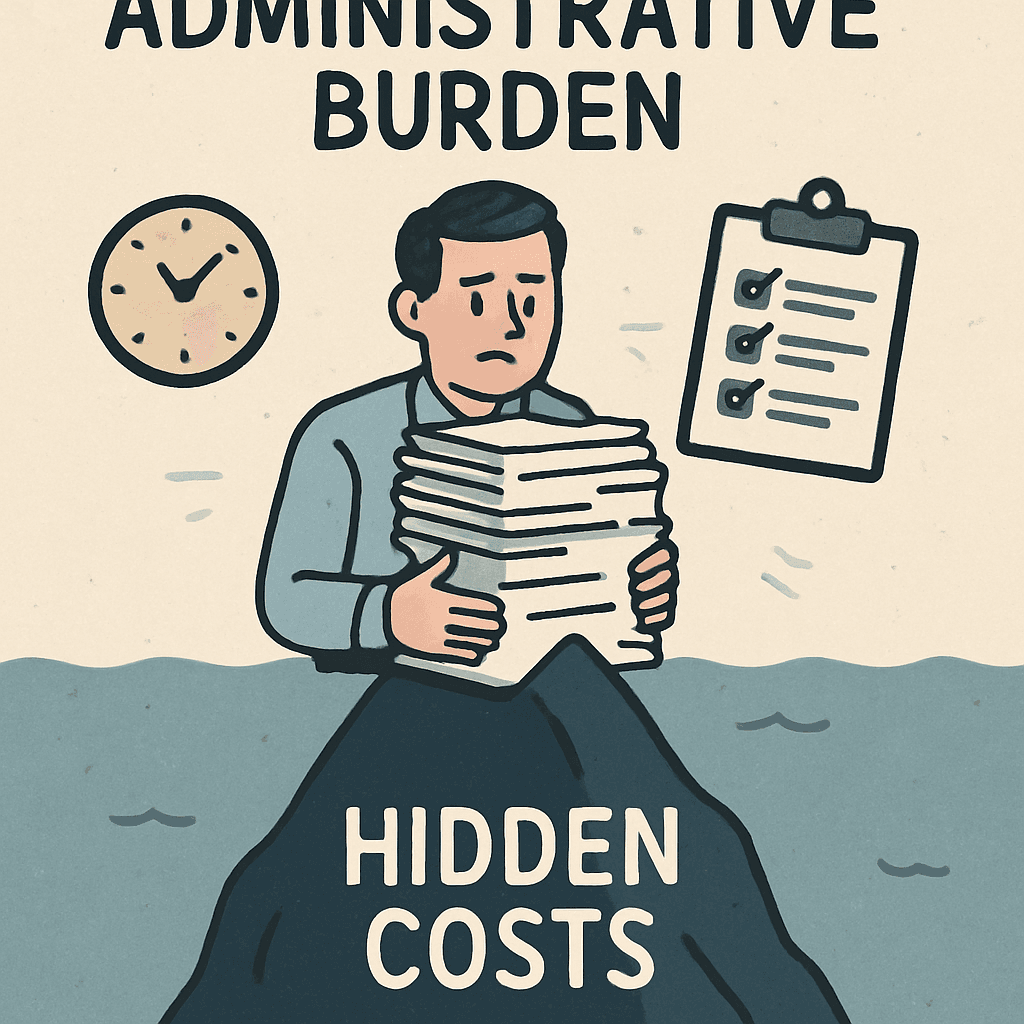
Reducing the administrative burden is essential for business growth. By understanding these hidden costs, companies can take strategic steps towards improvement.
What Is AI Task Automation?
AI task automation involves the use of artificial intelligence to perform routine tasks automatically. This technology replicates human actions while improving efficiency and accuracy.
AI task automation goes beyond simple repetitive tasks. It can analyse data, predict outcomes, and even learn from mistakes. This adaptability makes it a powerful tool for businesses.
In the realm of administration, AI task automation shines by handling time-consuming processes. Here’s how AI task automation contributes to efficiency:
- Automates data entry and reduces errors.
- Manages scheduling and calendar tasks.
- Handles email filtering and responses.
- Processes customer enquiries via chatbots.
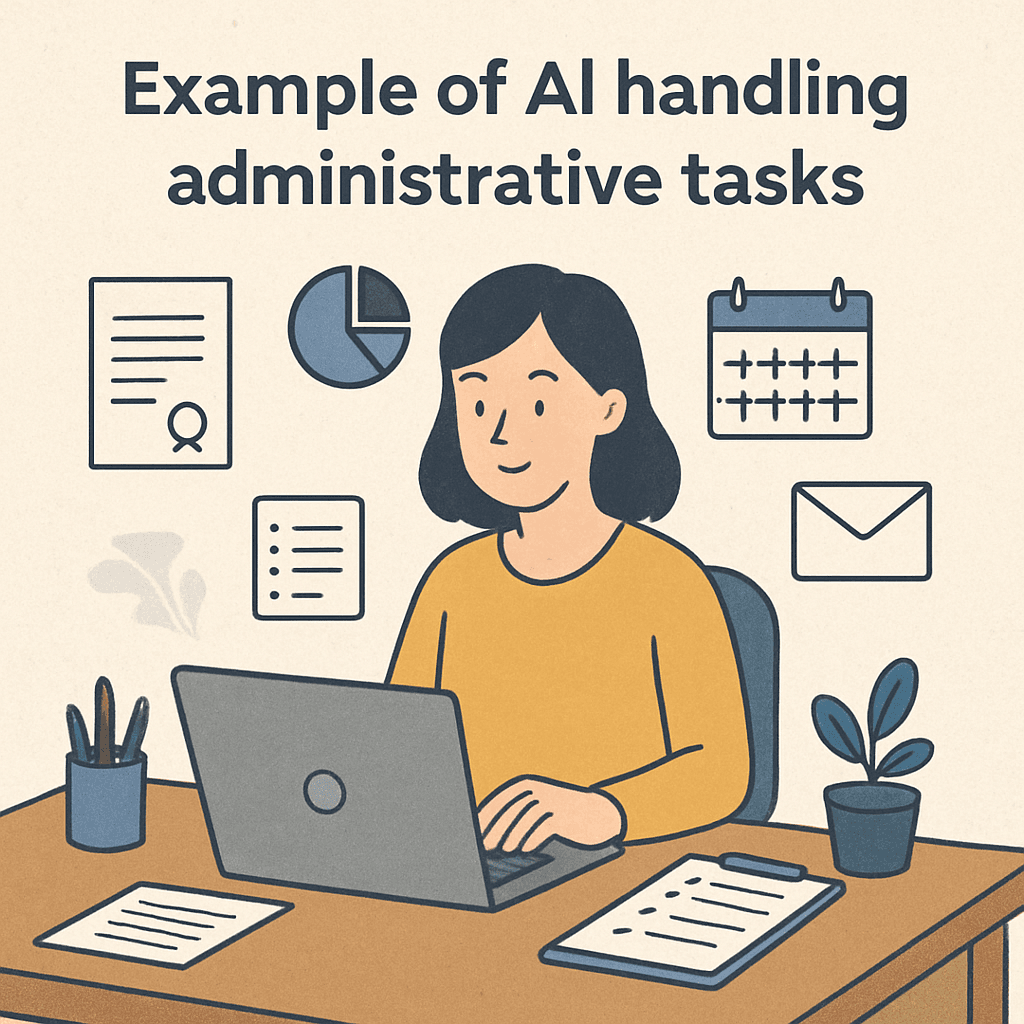
These capabilities allow employees to focus on strategic activities. By delegating routine tasks to AI, businesses unlock new productivity levels. AI task automation is not just about replacing human effort; it’s about enhancing human capacity.
Ultimately, this technology transforms administrative tasks into streamlined operations. AI’s precision and speed bring a new era of efficiency. Embracing AI task automation signifies a commitment to modernisation and progress.
Key Benefits of Automation in Administration
Automation in administration brings transformative benefits to organisations. By integrating AI, administrative tasks become more efficient, freeing up valuable time for employees. This shift allows businesses to focus on innovation and growth.
One of the primary advantages is improved accuracy.
AI reduces the risk of human error, ensuring tasks like data entry and scheduling are performed flawlessly. This reliability boosts the overall quality of work and enhances trust in administrative processes.
Cost savings are another significant benefit. By automating routine tasks, organisations can allocate resources more effectively. This can result in reduced labour costs and the ability to invest in other strategic areas of the business.
Automation also increases productivity. AI handles mundane tasks swiftly, enabling employees to dedicate their efforts to complex problem-solving and creativity. This leads to a more dynamic work environment with higher job satisfaction.
AI technology can also enhance decision-making. With AI-driven analytics, organisations gain insights from large datasets, leading to informed and timely decisions. Predictive analytics provides the foresight needed to stay competitive in the market.
Here are some key benefits summarised:
- Enhanced accuracy and reliability
- Cost efficiency and resource optimisation
- Increased productivity and employee satisfaction
- Improved decision-making with data-driven insights
- Scalability and adaptability in administrative processes

by Galina Nelyubova (https://unsplash.com/@galka_nz)
Embracing automation in administration is about more than just efficiency. It’s about transforming operations to be agile and innovative. By leveraging AI, organisations can thrive in an increasingly competitive landscape. The benefits of AI-driven automation reflect a broader commitment to excellence and progress.
Common Administrative Tasks AI Can Automate
AI’s capacity to automate routine tasks brings substantial improvements to administrative roles. By automating these tasks, businesses can optimise their operations significantly. This efficiency leads to a leaner, more focused workforce able to handle higher-level duties.
One of the most common tasks that AI can streamline is data entry. This task, often repetitive and prone to errors, becomes more accurate and efficient with AI. Automation ensures data is handled consistently and accurately.
Scheduling and calendar management also benefit greatly from AI integration. AI tools can manage appointments, avoiding conflicts and improving overall time management. This leads to smoother daily operations and increased productivity.
Email management is another area where AI excels. By sorting and prioritising emails, AI helps employees focus on the most important messages first. This reduces inbox clutter and enhances communication efficacy.
AI-driven chatbots are adept at handling customer service interactions. These virtual assistants provide quick, 24/7 support, improving customer satisfaction and response times. They effectively handle enquiries, freeing human staff for more complex queries.
Document management, including filing and retrieval, sees improved efficiency with AI tools. AI can categorise and store documents systematically, making access and sharing seamless. This enhances the flow of information across departments and teams.
Here are some tasks that AI can automate:
- Data entry and processing
- Scheduling and diary management
- Email filtering and prioritisation
- Customer support through chatbots
- Document filing and retrieval

by Mohamed Nohassi (https://unsplash.com/@coopery)
Automating these tasks allows organisations to thrive by focusing on strategic goals rather than administrative burdens. It supports a work environment where employees are engaged with meaningful, impactful work. Ultimately, AI transforms the administrative landscape into one of precision, efficiency, and innovation.
Real-World Examples: AI Administration Reduction in Action
AI is not just a futuristic concept; it is a transformative force in today’s administration landscape. Several organisations have successfully integrated AI to reduce administrative burdens. Let’s explore some real-world examples where AI has made a significant impact.
In the healthcare sector, AI is revolutionising patient record management. Hospitals use AI to digitise and streamline scheduling and record-keeping, reducing paperwork and freeing staff for patient care. This enhances both operational efficiency and patient satisfaction by minimising waiting times.
Retail companies use AI to automate inventory management. By analysing trends and predicting demand, AI helps ensure optimal stock levels, reducing wastage and boosting profits. This automation also means quicker restocking and happier customers.
AI plays a crucial role in education administration, especially in tasks like enrolment and grading. Several universities utilise AI to automate student registrations and maintain records, allowing staff to focus on educational quality rather than administrative overload.
In the financial industry, AI is widely used to automate risk assessment and fraud detection. AI systems analyse vast amounts of data to spot anomalies and potential risks, protecting companies and their clients from financial losses.
Government institutions benefit from AI by streamlining public service operations. Automated systems handle processes like licence renewals and application checks, leading to faster, more efficient citizen services.
Non-profits have not been left behind in leveraging AI for administrative tasks. These organisations use AI tools to manage donor relations and fundraising efforts, maximising resource allocation and impact.
Here are some fields where AI has shown tangible results:
- Healthcare: Patient records and scheduling
- Retail: Inventory management
- Education: Enrolment and marking
- Finance: Risk assessment and fraud detection
- Government: Public service operations
- Charities: Donor relations and fundraising

by Marek Studzinski (https://unsplash.com/@jccards)
These examples illustrate AI’s versatility and effectiveness in administration. By embracing AI, organisations across sectors can streamline operations, innovate processes, and deliver better outcomes for stakeholders.
Step-by-Step Guide: How to Reduce Admin with AI
Reducing administrative tasks with AI can transform your business operations, driving efficiency and innovation. Here’s a guide to implementing AI for reducing admin burdens in a structured and effective manner.
Step 1: Assess Your Current Processes
Begin by evaluating which administrative tasks are repetitive and time-consuming.
Identify areas where AI can make a meaningful impact. Tasks like data entry, scheduling, and email management often top this list. Understanding your current operations provides a foundation for AI integration.
Step 2: Set Clear Objectives
Establish specific goals for your AI implementation. Whether it’s reducing costs, improving accuracy, or speeding up processes, having clear objectives will guide your strategy. Defining success metrics upfront ensures you’re working towards measurable outcomes.
Step 3: Choose the Right AI Tools
Research and select AI tools that align with your objectives. Look for tools that offer scalability and customisation to suit your business needs. Consider platforms that seamlessly integrate with your existing systems. Some popular AI tools include chatbots, virtual assistants, and machine learning platforms.
Step 4: Pilot Testing
Before a full-scale launch, implement AI on a small scale.
Conduct pilot tests to assess the AI’s effectiveness in real-world scenarios. This allows for adjustments without risking your entire operation. Gathering feedback during this phase is crucial for fine-tuning systems.
Step 5: Train and Engage Your Team
Successful AI integration requires a knowledgeable team. Offer training sessions to help employees understand and leverage the new technology. Foster a culture of learning and adaptation to ensure smooth transitions. Engaged employees are crucial for operational success.

by Jj Englert (https://unsplash.com/@jjenglert)
Step 6: Monitor and Optimise
Once AI is in place, continuously monitor performance against your objectives. Look for ways to optimise processes and improve AI functions. Regular reviews ensure that your systems evolve alongside business needs.
Key Steps for Implementation
- Evaluate repetitive tasks
- Define goals and metrics
- Select appropriate AI tools
Continuous Improvement
- Pilot test for real-world insights
- Train employees effectively
- Optimise based on performance data
A thoughtful approach to AI can dramatically reduce admin burdens and propel your organisation forward. As you progress, remain adaptable and committed to continuous improvement. This strategy not only simplifies operations but also enables a shift from mundane tasks to strategic pursuits.
Top AI Tools for Administrative Efficiency
Harnessing the right AI tools can revolutionise administrative workflows. These tools have the potential to enhance efficiency, reducing manual labour and increasing accuracy. Here we delve into some top AI tools that can transform your administrative tasks.
AI-Powered Virtual Assistants
Virtual assistants like Siri, Alexa, and Google Assistant can manage calendars, schedule meetings, and set reminders. They provide convenience and save time by handling routine tasks autonomously. Integrating these assistants into office operations can significantly enhance productivity.

by Leon Seibert (https://unsplash.com/@yapics)
Intelligent Automation Platforms
Platforms such as UiPath and Automation Anywhere specialise in automating repetitive tasks. From data entry to invoice processing, they streamline operations, increasing efficiency across departments. These tools use machine learning algorithms to learn and improve over time.
Document Management Systems
AI-driven document management systems like M-Files and DocuWare automate document organisation and retrieval. They eliminate the hassle of manual filing, ensuring swift access to information. This reduces errors and enhances data security.
Key AI Tools for Administration
- Virtual Assistants: Siri, Alexa, Google Assistant
- Automation Platforms: UiPath, Automation Anywhere
- Document Management: M-Files, DocuWare
AI in Customer Relationship Management (CRM)
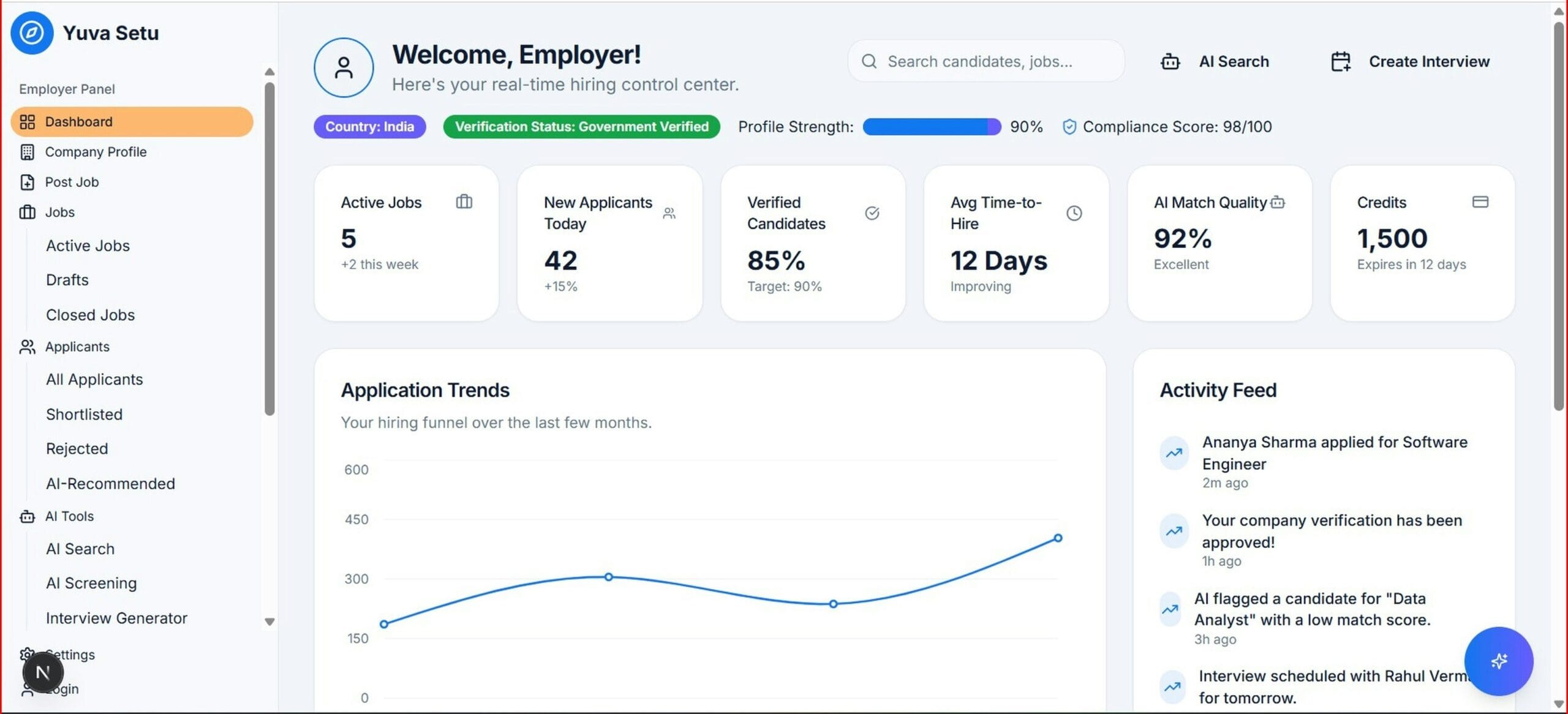
Advanced CRM tools like Salesforce Einstein utilise AI to analyse customer data and personalise interactions. This results in enhanced customer satisfaction and loyalty. Such systems automate data analysis, providing valuable insights quickly.
by prashant hiremath (https://unsplash.com/@prashantbh13)
Project Management Solutions
AI in tools like Monday.com and Trello optimises project management by automating task assignments and tracking. They help teams stay on task, ensuring deadlines are met with minimal administrative effort.
Each AI tool offers unique features, tailored for various administrative needs. Selecting the right combination of these tools can lead to seamless and efficient administration, fostering a more dynamic and focused work environment.
Overcoming Challenges: Integration, Training, and Change Management
Introducing AI into administrative tasks is not without its challenges. It requires careful planning and execution to ensure success. The process involves overcoming hurdles related to integration, training, and change management.
Effective integration of AI solutions requires compatibility with existing systems. Businesses may need to update or modify current software to facilitate smooth AI integration. A phased approach can help mitigate risks during this transition period.
Training is crucial for the successful implementation of AI tools. Employees need to understand how to use these new technologies effectively. Providing comprehensive training programmes ensures they feel confident and empowered, which boosts overall productivity.

by Jeremy (https://unsplash.com/@jcqm)
Change management is essential to address resistance that may arise during AI adoption. Employees might be hesitant due to fear of change or job displacement. Clear communication about the benefits and goals of AI integration can ease these concerns.
Key Steps for Overcoming AI Integration Challenges:
- Ensure software compatibility and system updates.
- Develop comprehensive training programmes for all employees.
- Communicate clearly to manage change effectively.
Leadership plays a vital role in facilitating this transformation. Their support can encourage a culture of innovation and adaptability. By addressing these challenges thoughtfully, organisations can harness AI’s full potential, driving significant improvements in administrative efficiency.
Ensuring Security, Compliance, and Ethical Use of AI
The integration of AI in administration raises significant considerations regarding security and compliance. Data security is paramount as AI systems often process sensitive information. Safeguarding this data against breaches is crucial to maintaining trust and integrity.
Compliance with regulations is another critical aspect. Organisations must ensure that their AI applications adhere to all relevant local, national, and international laws. This includes data protection regulations such as GDPR, which govern how data can be collected, stored, and used.

by FlyD (https://unsplash.com/@flyd2069)
Ethical use of AI extends beyond just following laws. It’s about ensuring transparency and accountability within AI systems. Organisations must avoid biases that can lead to unfair practices. AI should enhance fairness and equality rather than perpetuate existing disparities.
Key Considerations for Ethical AI Use:
- Implement robust data security measures.
- Ensure compliance with all applicable regulations.
- Foster transparency and avoid biases in AI systems.
By focusing on these aspects, organisations can create AI applications that not only improve administrative efficiency but also operate ethically and securely. Proactive steps in security, compliance, and ethics will ensure a smooth integration of AI that benefits both the organisation and its stakeholders. Understanding these factors allows businesses to confidently embrace AI technology, paving the way for responsible innovation.
Measuring Success: KPIs and ROI for AI in Administration
To gauge the effectiveness of AI in administration, measuring success through Key Performance Indicators (KPIs) is essential. KPIs provide insights into how well AI technologies are performing and impacting the organisation. They serve as a quantitative basis to assess improvements and identify areas that need adjustments.
ROI, or Return on Investment, is another critical metric. It helps organisations understand the financial benefits achieved from their AI investments. Calculating ROI involves considering both the costs of AI implementation and the financial gains resulting from increased efficiency and productivity.

by Deng Xiang (https://unsplash.com/@dengxiangs)
Key KPIs for AI in Administration:
- Reduction in time spent on repetitive tasks
- Increase in productivity levels
- Improvement in data accuracy and quality
Evaluating these KPIs enables organisations to pinpoint the precise improvements AI brings to their administrative processes. By analysing these metrics, businesses can make informed decisions on fine-tuning their AI strategies. Understanding both KPIs and ROI ensures that organisations can demonstrate the value of AI investments, thereby gaining support and confidence from stakeholders. This comprehensive evaluation helps in fostering an environment of continuous improvement, maximising the potential of AI in transforming administration tasks.
Future Trends: The Evolving Role of AI in Administration
AI in administration is constantly evolving. Each year, new technologies emerge, bringing innovative solutions that revolutionise the way businesses operate. These advancements promise to further reduce admin burdens and enhance overall efficiency.
One of the most anticipated future trends is the increased use of predictive analytics. This technology allows organisations to forecast future trends and make data-driven decisions with confidence. Predictive analytics are helping businesses stay competitive by providing insights into market dynamics and customer behaviour.

by Ekaterina Korol (https://unsplash.com/@katerinakorol)
Future trends in AI-driven administration include:
- Enhanced natural language processing (NLP) capabilities
- More sophisticated AI tools tailored to specific industries
- Greater emphasis on AI ethics and transparency
Another promising area of development is natural language processing (NLP). Advances in NLP can improve the way AI systems understand and process human language, leading to more intuitive and effective communication tools. These improvements have the potential to streamline operations by automating complex administrative tasks and reducing the need for human intervention.
As AI technologies become more sophisticated, the emphasis on ethical considerations is growing. Ensuring transparency and accountability in AI systems will be crucial. Organisations will need to navigate these ethical challenges to maximise AI benefits while maintaining user trust.
The role of AI in administration is set to expand, promising exciting opportunities for organisations willing to embrace technological change.
Conclusion: Taking the Next Steps Toward AI-Driven Administration
AI is reshaping the administrative landscape, offering immense potential for increased efficiency and reduced workload. Organisations that recognise and embrace these changes can transform their operations profoundly. The benefits extend from streamlined processes to enhanced decision-making capabilities.
To begin integrating AI, businesses should assess their unique needs. Understanding which tasks can be automated is crucial for success. From there, selecting the right AI tools and ensuring proper implementation will set the foundation for transformative improvements.
It’s vital to stay informed and adaptable as AI technologies continue to advance. Organisations should invest in continual learning and improvement, fostering a culture open to change. By doing so, businesses can fully leverage AI’s potential, paving the way for a future defined by innovation and growth.