

What does AI automation for recruitment agencies look like in the UK
AI automation is transforming recruitment agencies in the UK. It offers a new way to streamline hiring processes.
Recruitment agencies are embracing AI to stay competitive. This technology reduces time spent on repetitive tasks.
AI recruitment tools enhance candidate experiences. They provide timely updates and feedback, improving satisfaction.
Automation helps reduce unconscious bias in hiring. It ensures fair evaluation of candidates, supporting diversity and inclusion.
AI-driven analytics offer valuable insights. They help agencies make data-driven decisions and optimise recruitment strategies.
The UK recruitment industry is rapidly adopting AI. This shift promises to enhance efficiency and effectiveness in hiring.
The Rise of AI Automation in UK Recruitment
AI automation is growing rapidly in UK recruitment. More agencies are seeing its potential benefits for streamlining processes.
This rise can be attributed to several factors. Recruiters face pressure to fill roles quickly and efficiently. AI offers solutions that traditional methods can’t provide.
A significant advantage of AI is its ability to handle large volumes of data. Recruitment agencies use AI to analyse candidate data rapidly.
The competitive landscape drives agencies to adopt AI technology. Agencies leverage AI tools to differentiate themselves from competitors.
Here’s how AI is rising in the UK recruitment scene:
- Increased Efficiency: AI handles repetitive tasks quickly.
- Enhanced Decision-Making: AI provides data-driven insights.
- Improved Candidate Experience: AI offers timely communication.
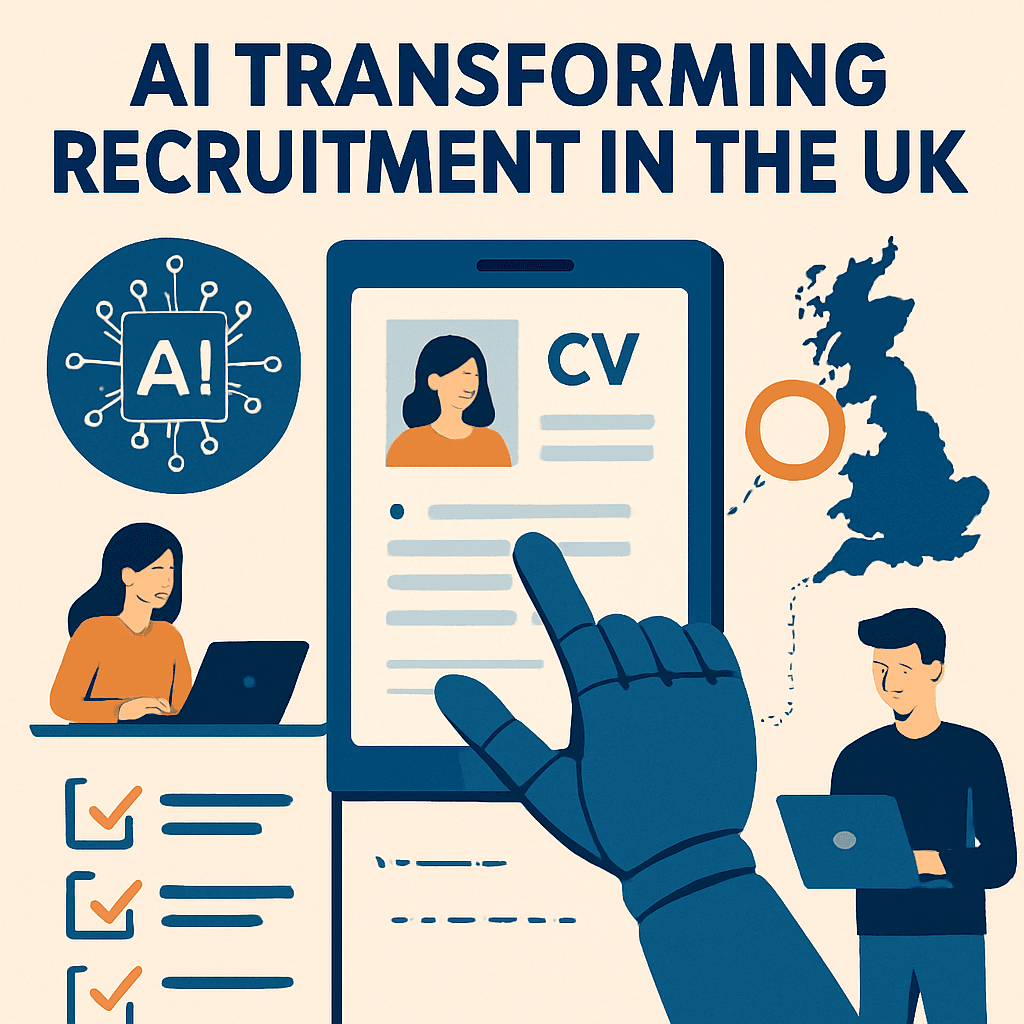
Agencies adopting AI see improved recruitment outcomes. They report faster placements and enhanced candidate matches.
AI automation is becoming essential in recruitment strategies. The trend shows no signs of slowing, promising continued growth.
Key Benefits of AI Automation for Recruitment Agencies
AI automation offers many advantages for recruitment agencies. One of the primary benefits is the significant reduction in time spent on repetitive tasks.
This efficiency enables recruiters to focus on strategic activities. They can engage more deeply with candidates and clients, building stronger relationships.
Moreover, AI enhances the candidate experience by providing consistent communication. Timely updates and feedback create a more engaging process.
Another key benefit is the improvement in matching accuracy. AI analyses candidate profiles and job specifications to ensure a better fit and compatibility.
By automating initial stages like CV screening and interview scheduling, AI reduces the manual workload. This streamlines operations and accelerates the hiring timeline.
AI tools also contribute to reducing bias in recruitment.
Algorithms can assess candidates objectively, promoting diversity and inclusion.
Here are the key benefits recruitment agencies experience with AI:
- Time Efficiency: Reduces time on manual tasks.
- Improved Matching: Increases accuracy in candidate-job fit.
- Enhanced Candidate Experience: Provides consistent communication.
- Reduced Bias: Promotes diversity in hiring.
- Data-Driven Insights: Offers valuable recruitment analytics.
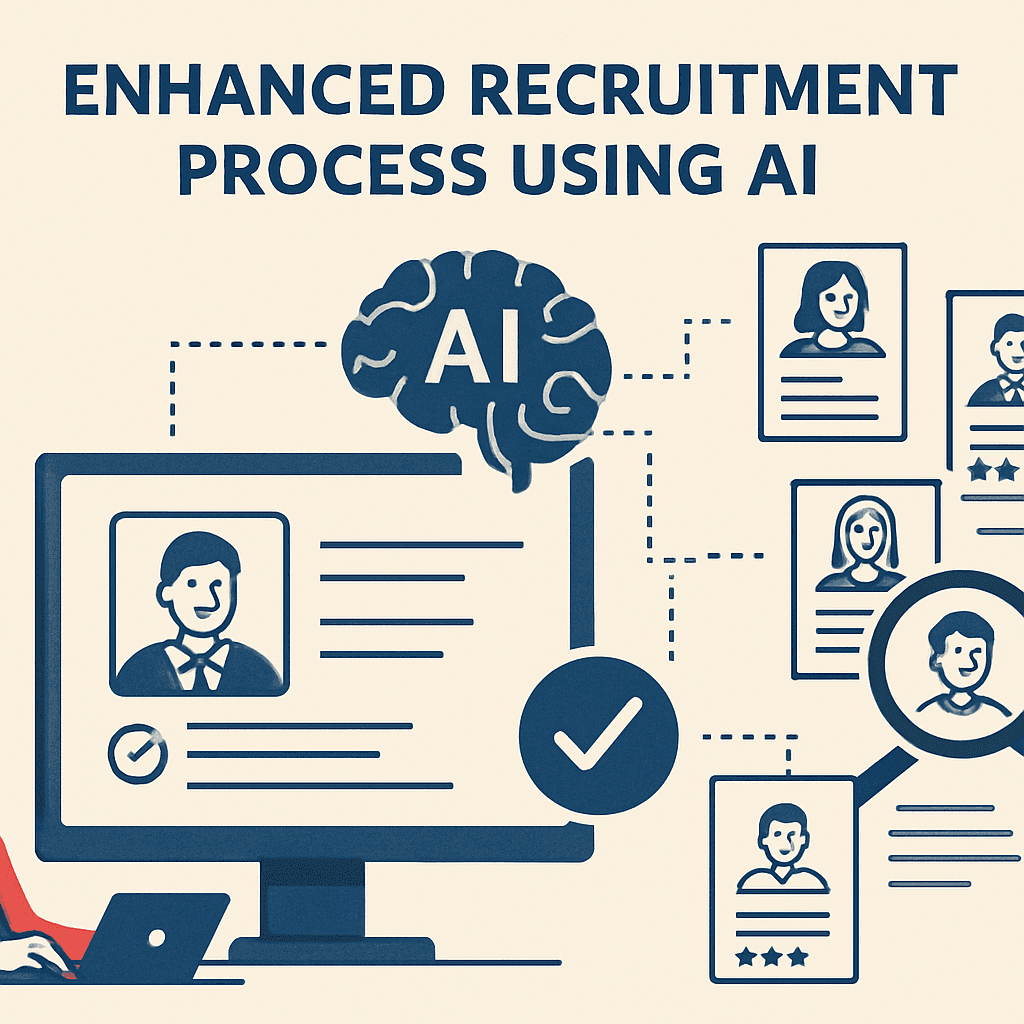
Cost savings is another vital benefit of AI automation. By reducing the reliance on manual labour, agencies can operate more cost-effectively.
As technology advances, AI continues to evolve. Its adaptive nature supports ongoing improvement in recruitment processes.
Recruitment agencies incorporating AI see many positive transformations. These benefits collectively provide a competitive edge in the challenging recruitment market.
How AI Recruitment Tools Work: Core Features Explained
AI recruitment tools are transforming how recruitment agencies operate. These tools leverage intelligent algorithms to streamline and enhance recruitment processes.
At the core of AI recruitment tools lies their ability to process large volumes of data. They analyse CVs, job descriptions, and past hiring trends efficiently.
These tools utilise natural language processing (NLP) to understand candidate profiles. NLP technology allows AI to match candidates with job requirements more precisely.
Machine learning is another feature integral to AI recruitment tools. It continuously refines the matching process by learning from historical hiring decisions.
AI tools often include automated chatbots. These chatbots engage candidates, answer queries, and schedule interviews, enhancing interaction and engagement.
Some common features of AI recruitment tools are:
- CV Parsing: Quickly extracts candidate information.
- Candidate Matching: Aligns skills with job needs.
- Predictive Analytics: Forecasts hiring success and retention.
- Data Insights: Provides reports on recruitment performance.
- Chatbots: Automates candidate communication and scheduling.

by Kit (formerly ConvertKit) (https://unsplash.com/@kit)
These tools also offer real-time analytics. These insights help recruiters make informed, data-driven decisions throughout the hiring process.
AI recruitment tools help reduce unconscious bias as well. Through objective data analysis, these tools ensure fair candidate evaluation.
By incorporating AI recruitment tools, agencies can create a more agile, responsive hiring process. Ultimately, this leads to more effective recruitment outcomes.
Recruitment Agency Software: Integrating AI for Maximum Impact
Recruitment agency software empowers agencies by integrating AI capabilities. It significantly optimises the hiring process across various stages.
AI-enhanced recruitment software automates repetitive tasks. This includes screening CVs, scheduling interviews, and tracking candidate communications.
The software ensures a smoother, more efficient workflow by incorporating intelligent features. It connects all recruitment stages seamlessly.
A noteworthy feature of AI-driven software is its ability to personalise recruitment strategies. By analysing data, it helps tailor approaches for different candidates.
It also provides actionable insights by identifying recruitment trends. This allows agencies to make data-driven decisions and improve strategic planning.
Key features of AI-integrated recruitment software include:
- Automated Screening: Streamlines initial candidate filtering.
- Interview Scheduling: Reduces manual scheduling errors.
- Data Integration: Centralises recruitment data for easy access.
- Performance Metrics: Evaluates recruitment effectiveness.
- Custom Reports: Generates insights for informed strategy development.
by Markus Winkler (https://unsplash.com/@markuswinkler)
With these capabilities, agencies can improve the quality of their hires. AI integration enhances precision in candidate matching.
Moreover, AI can predict future recruitment needs. It helps agencies stay competitive and ready for market shifts.
Overall, AI-integrated recruitment software provides a competitive edge. It boosts recruitment efficiency and ensures optimal resource use, enhancing agency success.
Real-World Use Cases: AI Automation Success Stories in the UK
Real-world examples highlight how AI automation transforms recruitment in the UK. Agencies across various sectors are experiencing remarkable improvements.
One notable success story involves a major healthcare recruitment agency. They leveraged AI to streamline their candidate vetting process, saving time and reducing costs.
In the tech sector, a prominent recruitment firm implemented AI-driven tools to enhance talent sourcing. This enabled them to identify high-potential candidates faster.
A financial services agency used AI to minimise unconscious bias in hiring. By automating candidate evaluations, they improved diversity and inclusivity within their client organisations.
AI-driven systems have also optimised recruitment marketing strategies. A retail recruitment firm saw a significant increase in candidate engagement after implementing tailored AI solutions.
Key achievements from AI-driven recruitment strategies include:
- Reduced Time-to-Hire: Streamlined processes for quicker placements.
- Enhanced Candidate Experience: Improved communication through automated updates.
- Improved Diversity: Fairer evaluations without bias.
- Cost Savings: Lower expenses with reduced manual efforts.
- Higher Retention Rates: Better candidate-job matches.

by David Walker | Walker Design Co. (https://unsplash.com/@walkerdesignco)
These examples underscore AI’s powerful impact on recruitment across various industries. By adopting AI tools, agencies refine operations and enhance recruitment outcomes.
AI continues to reshape the landscape of recruitment. Firms utilising these technologies report more efficient operations, improved candidate satisfaction, and strengthened market positions. This success inspires more agencies to embrace AI innovation.
Overcoming Challenges: Barriers to AI Adoption in Recruitment
AI adoption in recruitment encounters specific challenges. Understanding these barriers helps agencies plan better implementations.
One significant hurdle is the initial investment cost. Implementing AI systems requires upfront financial resources, which some agencies find daunting.
Another challenge is the skills gap within recruitment teams. Staff may lack the expertise needed to effectively use AI tools, necessitating training programmes.
Concerns about job displacement also exist. Recruiters fear AI might replace human roles, affecting job security within the industry.
Data privacy issues represent another barrier. Agencies must ensure AI systems comply with regulations like GDPR to protect candidate information.
Key barriers to AI adoption include:
- High Implementation Costs: Financial resources are needed initially.
- Skill Gaps: Staff require training to maximise AI benefits.
- Job Displacement Concerns: Fear of reduced human roles.
- Data Privacy Issues: Compliance with regulations is crucial.
Addressing these challenges involves strategic planning and careful execution. By tackling them, recruitment agencies can fully harness AI’s potential for improved operations and outcomes.
AI and Compliance: Navigating GDPR and Ethical Considerations
AI in recruitment introduces complex compliance and ethical issues. Navigating these is crucial for maintaining trust and legality.
The General Data Protection Regulation (GDPR) plays a prominent role. It dictates how data should be collected, processed, and stored, emphasising candidate privacy.
Ethical use of AI requires transparency. Candidates must be informed of AI’s role in the recruitment process and how it affects their applications.
Bias in AI systems presents ethical challenges. Agencies must ensure their AI tools promote fairness and do not perpetuate discrimination.
Best practices for compliance and ethics include:
- Clear Privacy Policies: Communicate data use transparently to candidates.
- Regular Audits: Ensure AI tools remain compliant and unbiased.
- Ethical AI Design: Focus on inclusivity and fairness in technology.
Staying updated with regulatory changes is vital. It helps agencies avoid legal pitfalls while leveraging AI advancements responsibly. This balance between innovation and compliance supports a fair, transparent, and lawful recruitment process.
Best Practices for Implementing AI Automation in Recruitment Agencies
Implementing AI in recruitment requires strategic planning. Clear goals and a roadmap are essential for success.
Start by identifying areas for improvement. Determine which repetitive tasks AI can automate efficiently.
Choosing the right AI tools is crucial. Look for solutions that integrate seamlessly with existing systems.
Training staff is a key step. Ensure your team understands how to use AI tools effectively and responsibly.
Regular evaluation is important. Continuously assess the impact of AI to ensure it meets agency needs and objectives.
Consider these best practices for a successful implementation:
- Define Objectives: Set clear targets for what AI should achieve.
- Select the Right Tools: Choose AI solutions that match your agency’s requirements.
- Provide Training: Educate staff on AI functionalities and benefits.
- Monitor Progress: Regularly review AI performance and make adjustments.
- Stay Informed: Keep up with AI advancements to leverage new opportunities.

by Vitaly Gariev (https://unsplash.com/@silverkblack)
Being proactive and flexible is necessary. Adapting to new AI trends will help maintain a competitive advantage. Focusing on efficient integration and continuous learning supports a smooth transition to AI-enhanced operations. By following best practices, agencies can optimise their recruitment processes and achieve better results.
The Future of AI Automation for Recruitment Agencies in the UK
The future of AI in recruitment looks promising. AI’s role in recruitment is set to expand significantly.
AI advancements will enhance personalisation in recruitment processes. Tailored job matches may become the norm.
Future AI tools could predict industry trends. Agencies could refine strategies based on data-driven insights.
Additionally, AI could transform candidate experiences. Engaging platforms may offer real-time interactions and feedback.
Here’s what to expect for the UK recruitment industry:
- Increased Personalisation: AI will tailor recruitment processes to individual candidates.
- Predictive Analytics: AI could forecast hiring trends and workforce needs.
- Enhanced Candidate Experiences: Interactive AI platforms will improve communication.
- Greater Efficiency: Automation will streamline more complex recruitment tasks.
- Agile Processes: Agencies will adapt quickly to changing job markets.
Staying informed is vital. Agencies should embrace innovation and explore new AI capabilities.
Adaptation is key to future success. As AI evolves, so too must recruitment strategies. By embracing AI, UK recruitment agencies can remain at the forefront of the industry.
Conclusion: Embracing AI for a Competitive Edge
Embracing AI automation offers recruitment agencies in the UK a significant competitive advantage. With the myriad benefits AI provides, agencies can streamline operations and boost overall efficiency.
AI tools can optimise the candidate selection process. They ensure that agencies not only save time but also enhance the quality of hires. This can lead to a notable increase in client satisfaction and loyalty.
Furthermore, by adopting advanced AI technologies, recruitment agencies can stay ahead of industry trends. They can capitalise on new opportunities that arise in the dynamic UK job market. This proactive approach ensures they remain relevant and competitive.
Incorporating AI isn’t merely a technological upgrade; it’s a strategic investment. Agencies that leverage AI effectively will position themselves as leaders in talent acquisition. By prioritising AI automation, they enhance their capability to deliver superior recruitment solutions and elevate their market standing.