

What does AI automation for marketing agencies look like in the UK
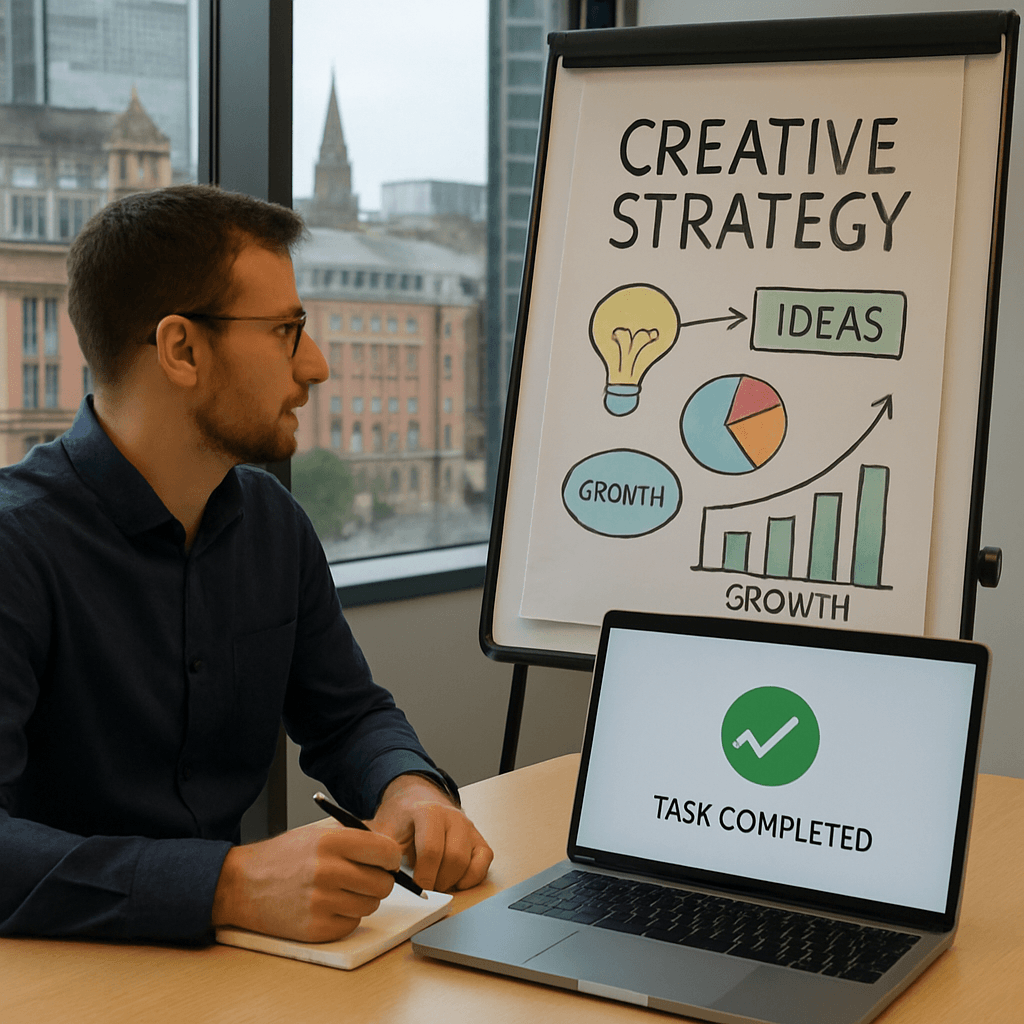
In the average London agency, a junior account manager spends up to 40% of their week just moving data between spreadsheets to build routine client reports. Such heavy reliance on manual labour actively drains profit margins and severely limits the time available for creative strategy. Implementing AI automation for marketing agencies in the UK isn’t about replacing your talented staff; it is about rescuing them from the soul-crushing daily grind of administrative work.
Many business owners mistakenly assume this technology simply means asking ChatGPT to write a quick social media post. According to recent industry surveys, the real competitive advantage lies in shifting away from basic generative tools toward intelligent process automation. Instead of just producing text, digital marketing automation connects your existing software like a digital assembly line, allowing one platform to finish a task and hand it seamlessly to the next.
Think of this connected setup as hiring a highly efficient “Digital Junior Intern” who never sleeps or stops for a tea break. This automated assistant flawlessly handles repetitive chores—like sorting inbound enquiries or formatting monthly metrics—without you ever touching a keyboard. Consequently, reducing operational overhead with marketing automation becomes a practical reality rather than just an intimidating tech buzzword.
Moving from a skeptical observer to a streamlined, modern operation requires a clear and pragmatic roadmap. We can break this implementation down into a straightforward three-pillar framework: Content, Process, and Analysis. By mastering these foundational areas, your team will quickly reclaim those lost hours and finally focus on work that truly drives growth.
Beyond ChatGPT: Distinguishing Creative AI from Workflow Automation
Typing a prompt into ChatGPT to draft a social post is just the tip of the iceberg for modern agencies. While standalone generative AI creates excellent content, true efficiency comes from integrated workflows where multiple apps communicate without human intervention. Instead of manually copying a newly generated blog post into WordPress and pasting the link into an email, advanced AI marketing solutions handle the entire journey for you.
Making these separate software platforms talk relies on a concept called an API, or Application Programming Interface. Think of an API as a secure digital handshake between two different apps, allowing them to pass information back and forth seamlessly behind the scenes. For professionals implementing AI automation, this invisible connection transforms isolated tools into a fully connected digital assembly line.
The heartbeat of this system is simple “Trigger-Action” logic, acting exactly like a highly efficient junior assistant. A trigger is a starting event, like a new client enquiry landing in your inbox, which immediately sparks an action, such as an AI automatically drafting a tailored reply. This foundational concept of digital marketing automation helps you step away from repetitive admin tasks and prepare to automate your client reporting workflows for instant scalability.
Automate Your Client Reporting Workflows for Instant Scalability
End-of-month reporting often feels like a punishment for UK agency teams, eating up days that should be spent on strategy. Instead of manually downloading CSV files to copy over campaign metrics like CTR and CPA, modern agencies use data extraction automation. This technology acts as a digital vacuum, instantly pulling numbers directly from ad platforms into your dashboards without a single manual click, effectively automating agency client reporting workflows.
Once the raw numbers are collected securely, the system triggers a seamless three-step reporting sequence:
- Data Extraction: Tools automatically gather live performance metrics across your connected Google and Meta platforms.
- AI Summarisation: An AI reads the data to spot trends, generating a plain-English summary of exactly why conversion rates fluctuated.
- Automated Delivery: The finalised document routes instantly to a Slack channel for internal approval or emails directly to the client.
Bridging these steps relies on trusted integration platforms like Zapier, Make, or Supermetrics to sync the data smoothly. When presenting these AI marketing solutions to clients, frame the technology as a high-speed analytical assistant rather than a human replacement. Emphasise that while the software does the mathematical heavy lifting, your experienced team provides the essential strategic oversight, an approach that is especially vital if you provide white label AI marketing services for partners.
Every hour saved on manual data entry is a direct boost to your agency’s profit margins and overall team morale. Because the automated workflows handle the tedious analysis, your account managers can fully dedicate themselves to building relationships and generating brilliant campaign ideas.
Scaling Creative Output Without Increasing Headcount

Meeting the content demands of UK clients is often a marketing agency’s biggest growth bottleneck. By integrating generative AI into content strategy, you implement a “Core-to-Cloud” approach, where a single robust asset—like an extensive industry whitepaper—is instantly transformed into dozens of smaller formats. Instead of starting from scratch every time, your team uses technology to chop that central document into blogs, email newsletters, and LinkedIn updates, effectively turning one week of deep research into a full month of client deliverables.
The secret to preserving distinct brand voices across these generated assets is “style-matching,” a practical technique where you feed the software a client’s past successful content so it accurately mimics their specific tone. Once the system understands that a boutique Manchester retailer sounds completely different from a corporate London law firm, you can confidently power automated social media management for multi-client accounts. This digital assistant drafts the daily posts in the correct voice, leaving your human copywriters to simply review, refine, and approve the final output.
Beyond just writing, you can accelerate overarching campaigns by leveraging AI-powered SEO audit software for agencies to automate tedious keyword research and competitor analysis. These intelligent tools scan thousands of web pages in minutes, highlighting immediate ranking gaps and formatting technical recommendations into clear, client-ready proposals.
Solving Agency Scalability with AI-Driven Lead Generation
Managing a growing client roster often means your agency’s sales funnel is neglected, especially when enquiries land outside office hours. Rather than making prospects wait, modern firms are implementing AI-driven lead generation for digital agencies. Think of this as a digital receptionist that instantly engages web visitors, reducing lead response time from hours to seconds.
Following that initial contact, the technology seamlessly moves into automated lead scoring. Building on your existing CRM framework, this process grades new contacts automatically based on their stated budget and project urgency. By asking strategic qualifying questions, the best AI assistants for UK creative teams instantly highlight high-value prospects, ensuring your human staff only dedicate their limited time to serious opportunities instead of casual tyre-kickers.
To stay ahead of the competition, you can also anticipate future client needs through predictive analytics for UK consumer behaviour. This involves software analysing historical market data to spot upcoming buying trends before they peak. When your agency knows exactly when a specific retail sector typically increases its digital marketing spend, you can proactively pitch tailored campaigns rather than merely reacting to incoming briefs.
While an around-the-clock pipeline transforms how a business scales, handling this increased volume of prospect information demands careful oversight. Because these intelligent systems process personal details to successfully qualify leads, securing that data is critical. Before launching any automated outreach programme, you must guarantee compliance with strict local privacy laws.
Navigating UK GDPR and Ethical AI in Advertising
Feeding client emails into a free, public chatbot is a fast track to a privacy breach. When evaluating AI marketing solutions, agency owners must understand the crucial difference between ‘Public’ AI—which uses your prompts to train its public models—and ‘Enterprise’ AI. Enterprise-grade AI privacy acts as a digital secure vault; it processes your campaign data without ever “learning” from your clients’ secrets, ensuring proprietary strategies never leak to the wider internet.
Beyond merely keeping data safe, navigating the ethical implications of AI in UK advertising requires radical transparency. Rather than hiding their use of automation, pragmatic agencies are building trust by proactively drafting clear AI transparency statements directly into client contracts. This honest approach proves you handle prospect information responsibly while utilising GDPR-compliant AI marketing tools in the UK to speed up your daily deliverables.
Securing your digital assembly line simply requires a standard operating procedure for every new software addition. Before deploying automated outreach, enforce this four-point compliance checklist:
- Data Processing Agreements (DPA): Ensure your AI vendor formally signs this mandatory legal framework.
- Zero-retention settings: Toggle this security feature so intelligent platforms instantly forget sensitive data after processing it.
- Client disclosure clauses: Add a plain-English AI usage statement to your master service agreements.
- Regular audit logs: Keep an automated record of exactly what information was analysed and when.
The Step-by-Step Roadmap to an AI-First Agency
Transitioning from legal theory to daily practice means avoiding the common mistake of changing everything at once. Rushing into new software overloads staff and disrupts client deliverables. Instead, building an AI-first marketing agency roadmap begins with a controlled, four-week AI Pilot Project. By focusing on a single administrative bottleneck—such as gathering weekly analytics—agency owners can realistically map out a timeline to reduce operational overhead by 25% within six months without causing widespread panic.
Finding the right person to drive this change rarely requires hiring an expensive software developer; you likely already have a natural ‘Automator’ sitting within your ranks. Empowering this tech-savvy junior marketer or account manager is the most practical solution for how to train agency staff on AI tools without relying on dry, corporate lectures. Have your new Automator establish an inclusive, low-pressure culture by running a monthly ‘AI Lab’ agenda:
- Tool discovery
- Workflow testing
- Fail-fast review
- Standard Operating Procedure (SOP) update
Fostering this transparent testing environment completely shifts the office mood from job anxiety to active empowerment. Your team will quickly realise that the true cost effectiveness of AI vs human creative is not about replacing your talented copywriters with chatbots. Rather, it is about eliminating mind-numbing data entry so your staff has more billable hours dedicated to high-value strategy and relationship building.
Your 30-Day Action Plan for UK Agency Automation
You no longer need to view artificial intelligence as a distant, intimidating concept. Instead, you now have a practical framework for AI automation for marketing agencies in the UK, transforming complex technology into an accessible digital assistant. By shifting your focus from manual data entry to strategic oversight, reclaiming that baseline of 15 hours per week is entirely within your reach.
The secret to solving agency scalability issues with machine learning is avoiding the temptation to overhaul your entire operation overnight. Your ideal Monday morning starting point is to simply identify your team’s most frustrating bottleneck. Try automating just one repetitive task, such as formatting a weekly client report or logging a new lead, and notice how quickly it restores vital mental clarity.
As you introduce digital marketing automation into your routine, you can step forward with confidence knowing these tools respect strict UK GDPR frameworks. You are maintaining complete control over your client data through secure methods while simultaneously levelling the playing field against much larger competitors.
This operational foundation empowers you to redefine what your business can achieve without exhausting your staff. Once comfortable with your first automated workflow, you will instinctively spot new ways to let the software handle the daily grind. Your team can finally return to doing what they do best: delivering brilliant, human-led creative strategy.